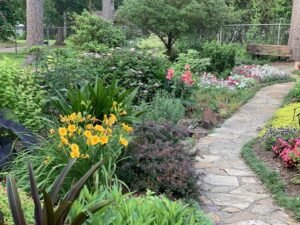
A yard can feel disconnected when each area uses unrelated plants, materials, or shapes. Cohesive landscape design brings those areas together by repeating selected features throughout the property. For homeowners considering backyard design, repetition can create continuity while allowing each outdoor area to retain its own purpose and character.
Repeat Plant Varieties
Using the same plants in several locations creates a visual connection. A flowering perennial might appear beside a walkway, around a patio, and near an entrance. Repeating it does not mean every bed needs to look identical. Different groupings and quantities can keep each area interesting while maintaining a familiar visual thread.
Evergreen shrubs can provide another form of repetition. When placed strategically, they can connect planting beds and provide consistent structure through changing seasons.
Repeat Materials
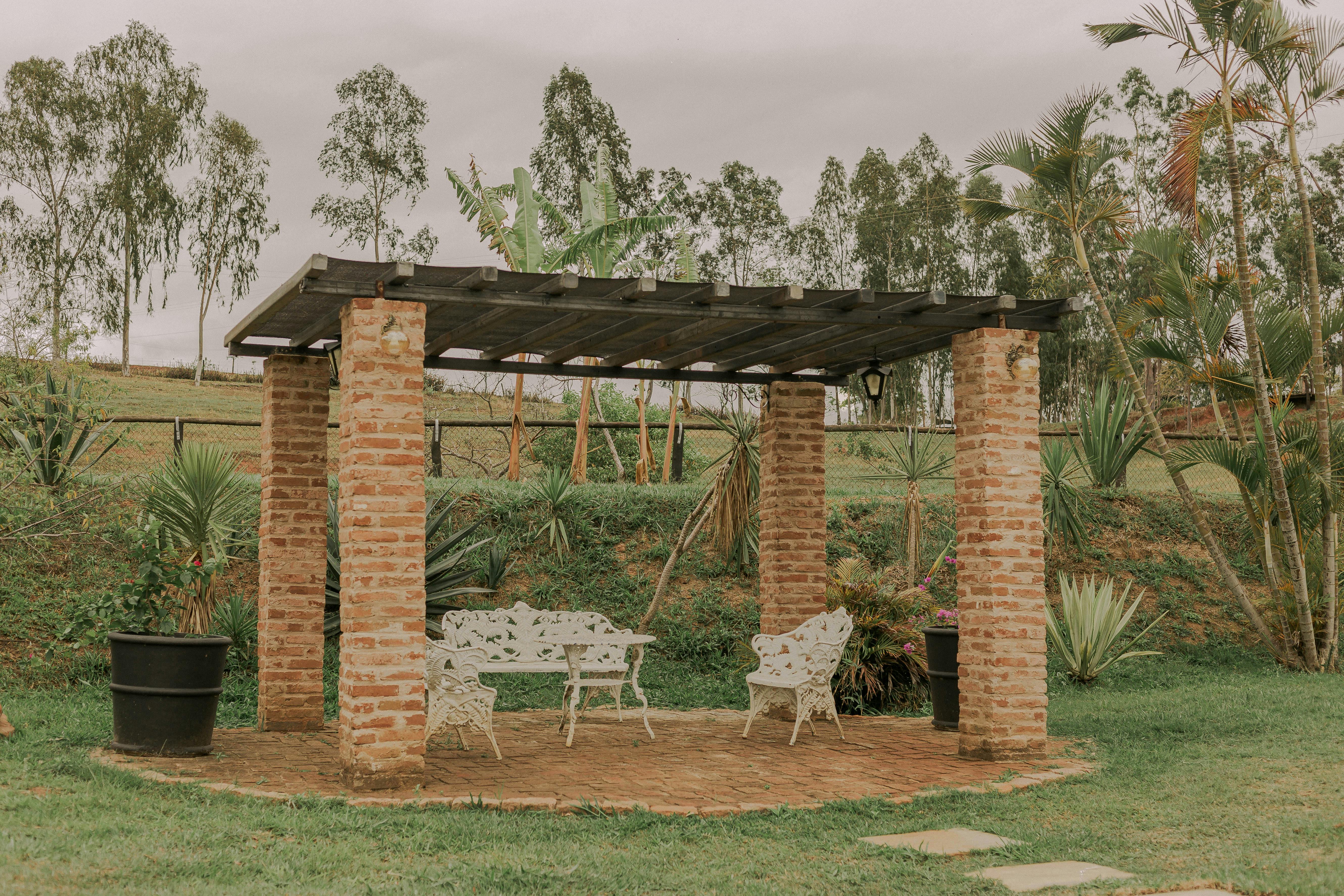
Materials can also link separate parts of a property. If a certain paving stone appears around a patio, using it again along a garden path can make both spaces feel related. The same principle applies to edging, gravel, stone, fencing, and other surface materials.
Matching materials does not require using them everywhere. A repeated material can appear at selected points, providing subtle connections without making the design feel monotonous.
Use Shapes and Forms
Shapes can establish rhythm just as effectively as plants and materials. Rounded shrubs, rectangular beds, curved paths, or repeated vertical features can create recognizable patterns. Repeating similar forms helps the eye move naturally from one area to another.
The scale of repeated elements matters. Large forms may suit an expansive property, while smaller features can work better in compact spaces. Keeping proportions appropriate prevents repetition from becoming visually overwhelming.
Create Rhythm Through Spacing
Rhythm develops when repeated elements appear at intentional intervals. Plants can be grouped in clusters, while lighting fixtures or decorative features can follow a consistent spacing pattern. Varying the distance slightly can keep the arrangement natural while preserving a clear connection.
Transitions between areas should also receive attention. Repeated plants or materials can bridge spaces between patios, pathways, lawns, and planting beds.
Keep the Overall Design Balanced
Repetition works best when supported by variation. Too much sameness can make an outdoor setting feel predictable, while too many unrelated elements can weaken continuity. A simple collection of recurring colors, textures, shapes, or materials can provide enough consistency without limiting creativity.
For homeowners researching landscape design, repeating selected features can help different outdoor areas feel connected and purposeful. Thoughtful planning can also make future additions easier to integrate.
A cohesive outdoor setting can combine artificial grass products, turf products, and a landscaping company in Essex while maintaining visual continuity. Turrific Turf can help you bring these elements together through practical choices that support a connected, welcoming property. Contact us today.