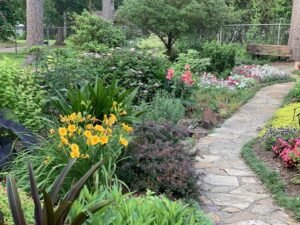
A thoughtfully planted yard can immediately feel fuller, more inviting, and connected to its surroundings. Layered landscape design uses different plant heights, textures, colors, and forms to create visual depth without making a space feel crowded.
Start With Height
The simplest way to build depth is to arrange plants from low to high. Groundcovers, grasses, and compact flowering plants can sit near paths and borders. Medium-height shrubs can occupy the middle layer, while taller shrubs or small trees provide structure farther back. This arrangement allows each plant to remain visible while giving the yard dimension.
Use Texture to Add Interest
Height is only one part of layered planting. Leaves with different shapes and surfaces can make a planting bed more engaging. Fine grasses can sit beside broad-leaved perennials, while rounded shrubs can provide contrast against upright plants. Mixing textures also helps the planting remain interesting when flowers are not in bloom.
Repeat Forms for Continuity
Repeating selected plants or forms can help separate layers without creating a disconnected appearance. For example, the same grass can appear near a walkway and again behind a flower bed. Repeated shapes guide the eye through the space and make separate planting areas feel connected.

Build Seasonal Variety
A successful planting plan should provide interest across several seasons. Spring flowers can introduce early color, while summer blooms and full foliage carry the display forward. Ornamental grasses, shrubs with berries, and plants with autumn color can maintain visual interest later in the year.
Consider the View From Every Angle
Layering works best when plant placement reflects how people use the property. Beds viewed from a patio may need shorter plants near seating areas, while beds along a fence can support taller growth toward the rear. Windows, entrances, walkways, and outdoor gathering spaces should all be considered when choosing plant heights and positions.
Keep Proportions Balanced
More plants do not always create more depth. Crowding can hide individual forms and make maintenance harder. Leave enough room for mature growth, airflow, and access. A balanced combination of open space and planting allows each layer to contribute to the composition.
Professional Planning Can Help
Thoughtful planting can transform an ordinary yard into a setting with stronger dimension, structure, and seasonal appeal. Landscape design can bring together plant selection, spacing, texture, and height based on the property. For homeowners considering backyard design, the right arrangement can also improve how outdoor areas connect with patios, paths, and living spaces.
With careful planning, artificial grass products in Windsor can also complement planted areas by providing a consistent, low-maintenance surface around layered beds. Turrific Turf can help bring your outdoor vision together with practical planting and turf solutions. Contact us today.